Advertzer
Showing posts with label tourist information india. Show all posts

Wednesday, March 4, 2015

Mysore Palace(Amba Vilas Palace)

     Mysore Palace


The Palace of Mysore (also known as the Amba Vilas Palace) is a historical palace in the city of Mysore in Karnataka, southern India. It is the official residence and seat of the Wodeyars — the Maharajas of Mysore, the former royal family of Mysore, who ruled the princely state of Mysore from 1399 to 1950.The palace is in the central region of inner Mysore, facing the Chamundi Hills eastward.

Mysore is commonly described as the City of Palaces. There are about seven palaces inclusive of this; however, Mysore Palace refers specifically to the one within the Old Fort. Built by the Maharaja Rajarshi H.H. Krishnarajendra Wadiyar IV, Mysore Palace is now one of the most famous tourist attractions in India, after the Taj Mahal, and has more than 4 million visitors annually.
The original palace built of wood, got burnt down in 1897, during the wedding of Jayalakshammanni, the eldest daughter of Chamaraja Wodeyar and was rebuilt in 1912 at the cost of Rs. 42 lakhs. The present Palace built in Indo-Saracenic style and blends together Hindu, Muslim, Rajput, and Gothic styles of architecture. It is a three-storied stone structure, with marble domes and a 145 ft five-storied tower. Above the central arch is an impressive sculpture of Gajalakshmi, the goddess of wealth, prosperity, good luck, and abundance with her elephants. The palace is surrounded by a large garden. Designed by the well-known British architect, Henry Irwin, the palace is a treasure house of exquisite carvings and works of art from all over the world.
The Maharaja's Palace is a beautiful three storied stone building of fine gray granite and rich pink marble domes, overlooking this structure is a five-storied 145 foot tower whose domes are gilded in gold. One enters the Palace through the Gombe Thotti or the Doll's Pavilion; this is a pavilion of traditional dolls from the nineteenth and early twentieth centuries. This collection also has a wooden elephant howdah (structure for carrying people on the elephant) that is decorated with 84 kilograms of gold.
Special events
Mysore palace in the evening

Every autumn, the palace is the venue for the famous Mysore Dasara festival, during which leading artists perform on a stage set up in the palace grounds. On the tenth day of the festival Vijaya Dashami, a parade with caparisoned elephants and floats originate from the palace grounds.

Dasara is the most extravagant festival of Mysore. It is celebrated in September and October of each year. The festival celebrates and commemorates the victory of the great Goddess Durga, also called

This festival has been celebrated by the Wodeyars at Srirangapatna since 1610, and in Mysore with great pomp since 1799. The tradition is still carried on, although the scale of the celebrations has diminished. The Dasara festivities have become an integral part of the culture and life in Mysore. To celebrate this festival, the Palace of Mysore is illuminated with more than 96,000 lights during the two-month period.
Chamundeshwari, after she slew the demon Mahishasura, thereby symbolizing the triumph of good over evil according to Hindu mythology.


During the Dasara the Royal throne made of 200kgs of pure gold is displayed. It is claimed that the ancestry of the throne can be traced to the Pandavas.


ATTARACTIONS NEARBY MYSORE PALACE:

Chamundi Temple
Prasanna Krishnaswamy Temple
Lakshmiramana Swamy Temple
   Mahabaleshwara Temple

Trinesvaraswamy Temple

Shweta Varahaswamy Temple

Mysore Palace Timings:
10.00 am - 05.30 pm
Mysore Palace is open all days of the week
Mysore Palace Entry Charges:
Adults Rs. 40/-
Children between 10 - 18 Years : Rs. 20/-
Children below 10 years : Free Entrance
Foreign Tourist Rs. 200/- (Audio Kit Facility Included)
Tickets are sold at southern gate of the Mysore Palace.
Mysore Palace Illumination Timings:
07.00 pm - 07.45 pm on Sundays, National Holidays and State Festivals.
07.40 pm - 07.45 pm on weekdays (Monday to Saturday) after the sound and light show.
There is no charges to watch Mysore Palace lighting
Mysore Palace Sound and Light Show:
07.00 pm - 07.40 pm
On weekdays (Monday to Saturday) except Sundays, National Holidays and State Festivals.
Sound and Light Show Entry Charges:
Adults Rs. 40/-
Children between 7 - 12 years : Rs. 25/-
Foreign Tourist Rs. 200/-
Tickets are sold at southern gate of the Mysore Palace.
How to Reach Mysore Palace
By Road
Mysore is 139kms to the south west of Bangalore. The state highway that connects these two cities is very well maintained. Travelling from Bangalore to Mysore by road is a pleasant experience and will take about 3hrs.  There are ordinary buses, semi-luxury buses and luxury buses operated by the Government of Karnataka. Every half an hour there is a non-stop bus to Mysore from Bangalore Bus Station.
By Train
Mysore is connected with a number of trains to Bangalore. The super fast luxury train the Shatabdi Express connects Mysore to Madras. The quickest and most comfortable way to reach Mysore is via Bangalore.

By Air
The nearest airport to Mysore is Bangalore (139 km). All the domestic airlines in the country operate their flights to Bangalore from all the major cities in the country. Some international airlines too have flights to Bangalore. Bangalore is to have an international airport shortly.

Best Time to Visit Mysore:


Mysore is one city that can actually be visited anytime! The summer is not scorching hot and neither is the winter too cold, making it pleasant enough to visit any time of the year.In September/October during Dussehra time, celebrations are on in full swing and the Mysore Palace is a pretty sight as it is lit up and festivities are in the air.

Where to Stay in Mysore:

Mysore has a variety of places to stay with accommodation options ranging from deluxe to budget hotels.


Saturday, July 30, 2011

Thousand Pillar Temple(Hanamakonda, Andhra Pradesh)


Hanumakonda in Warangal is a home to one of the very old temples of Andhra Pradesh, viz., the Thousand Pillar Temple.
The Thousand Pillar Temple is one of the very old temples of south India built by the Kakatiyas of Chalukya dynasty and this stands out to be a master piece and achevied major hieights in terms of architectural skills by the ancient kakathiya vishwakarma sthapathis. It is believed that the marvelous thousand pillared temple was built by King Rudra Deva in 1163 AD.
The Thousand Pillar Temple is a specimen of the Kakatiyan style of architecture of the 12th century.
It was destroyed by the Mughal Empires during their invasion of South India. It comprises one temple and other building. There are one thousand pillars in the building and the temple, but one pillar will not obstruct another from any point of the temple to see the god in the other temple.

The present day engineers have taken out all the pillars from the building to make it in to a perfect shape. After they lifted all the pillars they encountered a huge mass of sand. It took nearly two weeks for them to take away all the sand. It was wet sand, it is always wet because there is pipe connection directly from the nearby water body named Bhadrakali Cheruvu. It was one of the master piece in Civil Engineering. The Kakatiyans have used the well foundations 900 years ago.
The Thousand Pillar Temple with its ruins lies in the near the Hanamkonda-Warangal highway, about 150 kilometers from Hyderabad city. This temple is a beautiful star shaped with several shrines and lingams. There are three shrines inside the temple called the Trikutalayam. The three shrines of the Thousand Pillar Temple are dedicated to Lord Shiva, Lord Vishnu and Lord Surya. The Thousand Pillar Temple is surrounded by a big garden in which many small lingam shrines can be seen. Further there are 1000 richly carved pillars with an impressive Nandi bull in the temple. Nandi bull was carved out of a black basalt monolith polished carefully to give it a brilliant look. The Thousand Pillar Temple is constructed on a platform that is raised to 1 meter height from the ground level. The temple is provided with a number of pillars which are beautifully carved and adorned. Delicate stone work which definitely adds charm and beauty to this Thousand Pillar Temple. Rock cut elephants and perforated screens in the temple which are the characteristic of the then prevailing dynasty. The Thousand Pillar Temple is famous for its beautifully carved pillars, screens and detailed sculpture.

NEARBY ATTRACTIONS :
Bhadra Kali Temple
Bhadra Kali Temple is situated on a hilltop between Hanamkonda and Warangal, it is noted for its stone image of the Goddess Kali.
Jain Temple
Jain Temple which is 2,000-year-old Jain temple of Mahaveer is a famous place of worship for Jains in the country. The temple is embellished with beautiful images of Thirthankaras. The 5ft high image of Mahavira is entirely carved of Jade
Kolanupaka
Kolanupaka is 80-km from Hyderabad, and is situated between Hyderabad and Warangal. This was the second capital town of Kalyani Chalukyas during the 11th century AD. During this period the village was a religious centre of Jains, and ranks among other great Jain centers in the south.
Sri Veeranarayana Temple
Sri Veeranarayana Temple is raised in the Chalukyan style around 1104 AD.
Pakhal Lake
Pakhal Lake is a man-made lake built in 1213 AD by the Kakatiya king, Ganapathidev, by harnessing a small tributary of the Krishna River. It is located 50-km from Warangal and spreads over an area of 30-sq-km.
Ramappa Temple
Ramappa Temple or Ramalingeswara is the temple situated in Palampet village, which is 70-km form Warangal. This is a beautiful monument dating back to 1213 AD. It displays the glory and richness of the Kakatiya kingdom.

BEST TIME TO VISIT :
The Best time to visit the temple is from the month of October to March.

Accomodation :
The lodges and hotels in all three townships are primarily functional. It is best to stay at the Andhra Pradesh Tourism Development Corporation's Punnami Hotel at Kazipeth, opposite the REC and near the rail station. This is close to Hanamkonda and Warangal and is the most practical option to explore the area. The tourist season is winter; at other times there should be no problem with accommodation


HOW TO REACH THOUSAND PILLAR TEMPLE :
By Air :
The closest airport to this place is in Hyderabad.

By Rail :
The nearest railway station is in Warangal which is connected well with the other important cities and states of India.

By Road :
There is service of Private and APSTRC buses that connect well to Hyderabad, Karimnagar, Vijayawada, Khammam and some of the other districts.


GET DIRECTIONS


View Larger Map

Monday, June 20, 2011

DUDHSAGAR FALLS


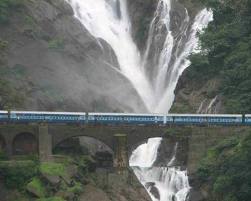
Dudhsagar falls is a tiered waterfall located on the Mandovi River in the state of Karnataka, India, on Goa's border with the state of Karnataka. It is 60 km from Panaji. The falls lie high up in the Mandovi River's watershed and so are not particularly spectacular during the dry season. During the monsoon season however, the falls are transformed into one of the most powerful falls in India. Dudhsagar Falls is listed as India's 5th tallest waterfall,and is 227th in the world at 310 m. The water plummets hundreds of feet in large volumes during the monsoon season, forming one of the most spectacular natural phenomena in Goa. It is a major part of the Goa ecosystem.This is a four tiered waterfall with a total height of 310 meters (1017 feet) and an average width of 30 meters (100 feet).

HOW TO REACH DUDHSAGAR FALLS


The waterfall is accessible by train and rough road. It is 10 kilometers from Kulem Railway Station (Indian Railway station code QLM). This waterfalls lies on the Londa-Madgaon railway route. To view this waterfalls from close distance, travel by Delhi-Goa express (12780), Pune-Ernakulam Express(11098), Chennai-VascoDaGama Express or Miraj-Castle Rock passenger train which starts from Miraj rail junction. There is a small rail station about 50 feet near the waterfalls and some trains halt here for 2 mintutes.
GET DIRECTIONS


View Larger Map

Friday, June 10, 2011

Charminar (HYDERABAD)


Charminar built in 1591 AD, with four ornate minarets supported by four grand arches, it had become global icon of Hyderabad and listed among the most recognized structures of India.The Charminar, is located on the east bank of Musi river. Sultan Muhammad Quli Qutb Shah, the 5th ruler of the Qutb Shahi dynasty built Charminar shortly after he had shifted his capital from Golkonda to what is now known as Hyderabad. He built this famous structure to commemorate the elimination of a plague epidemic from this city.

Charminar is a beautiful and impressive square monument. Each side measures 20 m, and each of the corners has a tall, pointed minaret. These four gracefully carved minarets soar to a height of 48.7 m above the ground, commanding the landscape for miles around. Each minaret has four stories, marked by a delicately carved ring around the minaret. Unlike the Taj Mahal, Charminar's four fluted minarets of Charminar are built into the main structure. Inside the minarets 149 winding steps guide the visitor to the top floor, the highest point one can reach, which provides a panoramic view of the city. Charminar has the signature style of Islamic architecture.

Best Time to Visit : October to March 

Timings: Open Weekdays: 0900-1700; Saturdays: 0900-1700

Popular as : The Arc de Triomphe of the East

Other Attractions : Mecca Masjid, Chow Mohalla Palace, Shahali Banda, Laad Bazar, Kali Kaman and Patthar Gatti.


HOW TO REACH CHARMINAR
Hyderabad is well connected with the rest of the country by air, railways and roads. Once in Hyderabad, the local transport like auto-rickshaws and taxis should get you to Charminar.


GET DIRECTIONS


View Larger Map

Wednesday, April 20, 2011

ELEPHANTA CAVES INDIA (MAHARASHTRA)


ELEPHANTA CAVES INDIA

The Elephanta Caves are a network of sculpted caves located on Elephanta Island, in Mumbai Harbour, 10 kilometres (6.2 mi) to the east of the city of Mumbai in the Indian state of Maharashtra. The island, located on an arm of the Arabian Sea, consists of two groups of caves—the first is a large group of five Hindu caves, the second, a smaller group of two Buddhist caves. The Hindu caves contain rock cut stone sculptures, representing the Shaiva Hindu sect, dedicated to the god Shiva. These caves house rock cut temples dating back to the 5th century CE. The Elephanta island was so named by the Portuguese, after the statue of an elephant near the landing area of the island. The caves are hewn from solid basalt rock. All the caves were also originally painted in the past, but now only traces remain. The main cave (Cave 1, or the Great Cave) was a Hindu place of worship until Portuguese rule began in 1534, after which the caves suffered severe damage. This cave was renovated in the 1970s after years of neglect, and was designated a UNESCO World Heritage Site in 1987 to preserve the artwork.
The island is 1.5 miles (2.4 km) in length with two hills that rise to a height of about 500 feet (150 m). The two hills of the island, the western and the eastern, have five rock-cut caves in the western part and a brick stupa on the eastern hill on its top composed of two caves with few rock-cut cisterns. One of the caves on the eastern hill is unfinished. It is a protected island with a buffer zone according to a Notification issued in 1985, which also includes “a prohibited area” that stretches 1 kilometre (0.62 mi) from the shoreline.
Main cave (SHIVA CAVE)
The main cave, also called the Shiva cave, Cave 1, or the Great Cave, is 27 metres (89 ft) square in plan with a hall called mandapa. At the entrance are four doors, with three open porticoes and an aisle at the back. Pillars, six in each row, divide the hall into a series of smaller chambers.The roof of the hall has concealed beams supported by stone columns joined together by capitals.Usualy entrance of a shiva shrine is in the east-west but here entrance to the main cave aligned with north-south axis. The northern entrance to the cave, which has 1,000 steep steps, is flanked by two panels of Shiva dated to the Gupta period. The left panel depicts Yogishvara (The Lord of Yoga) and the right shows Nataraja (Shiva as the Lord of Dance). Each wall has large carvings of Shiva, each more than 5 metres (16 ft) in height. The main cave blends Chalukyan architectural features such as massive figures of the divinities, guardians, and square pillars with custom capitals with Gupta artistic characteristics, like the depiction of mountains and clouds and female hairstyles.
SHIVA PARVATI ON KAILASH AD RAVAA LITIG KAILASH
The carving on the south wall to the east of the portico depicts Shiva and Parvati seated on their abode Mount Kailash. The carved panel facing this one is a two level depiction of Ravana lifting Kailash. The upper scene is Mount Kailash, where Shiva and Parvati are seated. A legend relates to both these panels.Once, Parvati was annoyed with Shiva. At this moment, Ravana, who was passing by Mount Kailash, found it as an obstruction to his movement. Upset, Ravana shook it vigorously and as a result, Parvati got scared and hugged Shiva. Enraged by Ravana's arrogance, Shiva stamped down on Ravana, who sang praises of Shiva to free him of his misery and turned into an ardent devotee of Shiva. Another version states that Shiva was pleased with Ravana for restoring Parvati’s composure and blessed him.

TRIMURTI GANGADHARA AND ARDHANARISHVARA
The most important sculpture in the caves is the Trimurti, carved in relief at the back of the cave facing the entrance, on the north-south axis. It is also known as Trimurti Sadashiva and Maheshmurti.Described as  a "masterpiece of Gupta-Chalukyan art".
The image, 20 feet (6.1 m) in height, depicts a three-headed Shiva, representing Panchamukha Shiva, The three heads are said to represent three essential aspects of Shiva — creation, protection, and destruction.
The Gangadhara image to the right of the Trimurti, is an ensemble of divinities assembled around the central figures of Shiva and Parvati, the former bearing river Ganges as she descends from the heaven. The carving is 13 feet (4.0 m) wide and 17.083 feet (5.207 m) high.

SHIVA SLAYING ANDHAKA AND WEDDING OF SHIVA
The central figure, which is much ruined below the waist, is measured at 11.5 feet (3.5 m) high, and shows Bhairava, or Virabhadra, a frightful form of Shiva. he niche image carved on the south wall is an ensemble of divinities assembled around the central figures of Shiva and Parvati shown getting married.
YOGISHVARA AND NATARAJA
The panel to the east of the north portico is Shiva in a Yogic position called Yogisvara.The panel carving in the west niche opposite Yogishvara depicts Shiva as Nataraja performing the Tandava (cosmic dance). The niche is 13 feet (4.0 m) wide and 11 feet (3.4 m) in height and set low on the wall.
TIMINGS: OPEN DAILY BETWEEN 9AM TO 5.30 PM (EXCEPT MONDA
ENTRY FEE: Rs.10 FOR INDIAN CITIZENS ABOVE 15 YEARS AND Rs.250 FOR OTHERS ABOVE 15 YEARS
ACCOMMODATION:THERE ARE SO MANY FIVE STAR,THREE STAR AND BUDGET HOTELS IN MUMBAI AVAILABLE FOR ACCOMMODATION.
HOW TO REACH ELEPHANTA CAVES
The Elephanta Caves can be reached by a ferry from the Gateway of India, Mumbai, which has the nearest airport and train station.

View Larger Map

Friday, March 25, 2011

HUMAYUN TOMB (DELHI)


Humayun's Tomb:
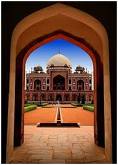
Humayun's senior widow Bega Begum, popularly known as Haji Begum, built the magnificent Humayun's Tomb in Delhi, in 1565. It is one of the most beautiful Mughal monuments, with features like high arches and a full double dome. Located on Mathura Road, near its crossing with Lodi Road, Humayun's Tomb is built on a large stone platform, surrounded by green lawns and has a crescent on the top of the dome, instead of the usual lotus. It is said that the Begum spent one and a half million rupees on the tomb, which was constructed between nine and fourteen years after the death of the Emperor Humayun in 1556.
Mirak Mirza Ghiyas, the architect of Humayun's Tomb, designed it in a Persian 'charbagh' or square four-garden style enclosed by high walls on three sides, and the River Yamuna on the other. The style was introduced in India by Babur, the first Mughal emperor.


Timings: Open on all days from sunrise to sunset
Preferred Timings: Late afternoon is the best time to see Humayun's Tomb, because the natural light aids photography
Admission Fee: INR 10 for citizens/ INR 250 for foreigners


How to Reach: Tourists can either take local buses from various points within the city to reach this monument, which is located on Mathura Road or they can hire auto-rickshaws and taxis or take the metro rail.
Nearest Railway Station: Nizamuddin Railway Station
Nearest Functional Metro Station: Kendriya Terminal
Nearest International Airport: Indira Gandhi International Airport 

GET DIRECTIONS


View Larger Map

Friday, March 18, 2011

RED FORT ( Lal Qila ) DELHI

RED FORT (Lal Qil'ah or Lal Qila ) DELHI

Red fort lies along the Yamuna River. The layout of the Red Fort was organised to retain and integrate this site with the Salimgarh Fort.

Shah Jahan shifted his capital from Agra to Shahjahanabad and laid the foundation of Red Fort, or the Lal Quila, on 16th April 1639. It took nine years to build this mighty citadel and it got completed on 16th April 1648. It is said that about one crore rupees, an astronomical sum in those days, was spent on its construction. Built of red sandstone, it is octagonal in shape, with two longer sides on the east and west. The perimeter of its strong ramparts is about 2.41 km. Red Fort rises to a height of 33.5 m on the town side and 18 m along the river. A wide moat surrounds the fort, which was originally connected with the river and was always filled with water. The two main gateways, known as Lahori Gate and Delhi Gate,The master builders of the Red Fort were Hamid and Ahmad. Visitors are allowed only in a part of Red Fort, as the army occupies the rest of it. It was designated a UNESCO World Heritage Site in 2007.


MAIN ATTRACTIONS OF RED FORT

Diwan-i-Am                        
Diwan-i-Am or Hall of Public Audience is situated in the Red Fort of Delhi.

Hamam
The hammams or royal baths; these consist of three rooms topped by domes, with a fountain in the center


Moti Masjid
To the west of the hammam is the Moti Masjid, the Pearl Mosque. This was a later addition, built in 1659 as a private mosque for Aurangzeb, Shah Jahan's successor.

Mumtaz Mahal               
One of the original six main-palaces situated along the river front, Mumtaz Mahal was also known as 'Chhoti Baithak'.

Naubat Khana                  

Naubat Khana, or Naqqar Khana (meaning the Drum House), is situated at the entrance of the palace area. Here music was played five times a day at the appointed hours.

Nahr-i-Bihisht
A beautiful water channel called 'Nahr-i-Bihisht' (meaning Stream of Paradise) flew through these palaces.

HOW TO REACH RED FORT

Delhi is well connected by air, rail, and road with important centers of India. Tourists can reach the Red Fort in many ways. They can either take local buses from various points within the city, which is located near the Interstate Bus Terminus at Kashmere Gate in the heart of the city, or, alternatively, they can hire auto-rickshaws and taxis for the purpose. There are also regular buses from other important bus termini like the Interstate Bus Terminus at Sarai Kale Khan and Connaught Place to this monument.


ACCOMODATION

There are several hotels near Red Fort to cater to the accommodation needs of the guests offering them a chance to spend some quality time in the precincts of these medieval structures.

GET DIRECTIONS

View Larger Map

Saturday, March 5, 2011

TAWANG MONASTERY ARUNACHAL PRADESH


TAWANG TOWN

Tawang town is located approximately 555 km (345 miles) from Guwahati. Tawang has an average elevation of 2,669 meters (8,756 feet).

Tawang Monastery was founded by the Mera Lama Lodre Gyasto in accordance to the wishes of the 5th Dalai Lama, Nagwang Lobsang Gyatso. It belongs to the Gelugpa sect and is the largest Buddhist monastery in India. The name Tawang means Horse Chosen.

It is said to be the biggest Buddhist monastery in the world outside of Lhasa, Tibet It is a major holy site for Tibetan Buddhists.

Tipi Orchid sanctuary in Tawang houses thousands of varieties of orchids.

Visitors to Tawang require special Inner line permits from the government which are available in Kolkata, Guwahati, Tezpur, and New Delhi.

BEST TIME TO TRAVEL: April to October.


HOW TO REACH TAWANG MONASTERY

BY ROAD:

Tourists can travel there from Tezpur, Assam, which is 12 hours by road. Tezpur has direct flights from Kolkata. Guwahati, Assam, is 16 hours by road. In June 2008, a daily helicopter service from Guwahati was started by the Arunachal Pradesh government.

BY RAIL:

BThe railway station at Rangapara (Assam) is the nearest railhead to Tawang. However, Guwahati is better connected to the rest of India. From Guwahati, you can take buses or cabs to Tawang via Tezpur (343 km) and Bomdila (162 km, on the Assam-Arunachal border).

BY AIR:

Technically, Tezpur (343 km) in Assam is the nearest airport to Tawang. However, Guwahati is a more accessible entry point from the rest of India. From Guwahati, you can take a bus or hire a cab to reach Tawang via Tezpur and Bomdila (162 km, on the border of Assam and Arunachal Pradesh.)
                                                                           

ACCOMODATION :
accommodation facilities – government rest houses, hotels and lodges. There are regular buses and Sumo taxis to Tawang from these three towns, Tawang,Tejpur,and guwahati.


View Larger Map

Friday, March 4, 2011

AJANTA ALLORA CAVES

Ajanta Caves in Maharashtra, India


AJANTA is world's greatest historical monument recognised by UNESCO far near from Jalgaon city of Maharashtra, India.
Ajanta is the location of some of the finest examples of ancient Indian sculptures and murals, housed in 28 caves that served as a major Buddhist monastery from the second to seventh century BC. Today, the Ajanta Caves are renowned all over the world for their majestic beauty and is a UNESCO World Heritage Site. At Ajanta, the caves hewn out of the horse-shoe shaped stone cliffs surrounding the River Waghora are an important heritage site, allowing viewers to glimpse the amazing skill of ancient muralists and sculptors. These caves were chiselled out by Buddhist monks between 200 BC and 650 AD as ‘chaityas’ (prayer halls) and ‘viharas’ (monasteries), and contain exquisite frescoes and fine sculptures. One can amble through the Ajanta Caves or take a guided tour – the art contained in these early Buddhist Caves are great works by themselves and one can spend hours studying them. Ajanta caves are classified in two phases known as the Hinayana phase and the Mahayana phase. The former phase depicts scenes in which Lord Buddha was worshipped through some specific symbols
Some of the well known caves are as follows. Cave 1 consists of some of the finest painting specimens, particularly the two bodhisattvas of Padmapani and Vajrapani and an impressive seated Buddha sculpture. Beneath his statue is placed the Wheel of Life which symbolised the teachings of karma and rebirth by Buddha. A striking feature of Cave 2 is its beautiful ceiling painted to resemble a tent and its lovely animated sculptures. The walls of the cave are decorated with intricate patterns depicting scenes of Gautam Buddha’s birth. Cave 9 not only contains sculptures, but remarkably preserved frescoes as well. Cave 11 represents scenes from the early stage of Buddha’s life. In this cave the sculpture of Lord Buddha is attached to a stupa which is a blend of both image and stupa worship. In Cave 12 and Cave 13 one can view the beautiful paintings that glow softly in the dark and gasp at the life-size and miniature sculptures. Cave 15 and Cave 16 explain the pictorial legend, pointing out some of the more amazing aspects of the paintings and sculptures that transform the rocky cave walls. Of particular interest are Cave 17 with its exquisite murals portraying devotees with offerings in the Royal Procession, Cave 19 with some astounding sculptures of Buddha, lion heads and riders and Cave 26 with its impressive carvings from Lord Buddha’s life. 
                                                   

Best time to visit:

Winter months (from October to February) or during the monsoons are a good time to visit the Ajanta Caves.


HOW To REACH AJANTA ALLORA CAVES?


By Air:

Currently Aurangabad is the nearest Air point for Ajanta. It can be reached from New Delhi and Mumbai (Bombay), international airport. Indian airlines as well as Jet Airways have daily flight to Aurangabad from New Delhi and Mumbai.
Jalgaon is also developing its Airport. Soon it will also start. Ajanta Caves is far near from Jalgaon Airport while a bit distant from Aurangabad Airport.

By Rail:

Jalgaon is the best place to drop in for Ajanta if you like Rail journey. It is centre point of all major railway stations of India and has Bhusaval (Just 28kms from Jalgaon) as Second largest depot of railways in entire Asia.
All Super Fast, express, mail and passenger trains stops at Bhusaval and most of them at Jalgaon as well. You can check online status of availability of reservation on Indian railways official website. From Jalgaon, you can pick up Taxi/ state transport department bus to reach ajanta. 

Cave Timings:

9.00AM to 17.30PM Indian Standard Time (IST)
Ajanta Caves remain closed on Monday and Ellora Caves remain closed on Tuesday. BOTH CAVES REMAIN OPEN ON ALL NATIONAL HOLIDAYS

Cave Charges:


1. For Indians below 15 years : FREE of Charge
2. For Indians above 15 years : Rs. 10/- per head
3. For Foreigners above 15 years : US $5 or equivalent in Indian rupees per head
4. For Photo Camera/ Video Camera: Rs. 5/- (Camera to be used without flash)


View Larger Map

Wednesday, March 2, 2011

TAJ MAHAL

                                                                 
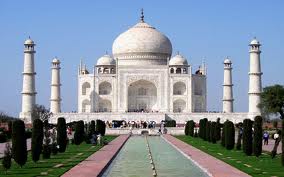
 TAJ MAHAL is a feeling that caresses one's heart like a pure melody of love. Mesmerizing, majestic, scintillating - the Taj Mahal in Agra India is a wondrous gift to the world that depicts love in all its grandeur. Renowned for its architectural magnificence and aesthetic beauty, it counts among man's proudest creations and is invariably called one of the wonders of the world.

Synonymous with India, the Taj Mahal in Agra is undoubtedly the epitome of India tourism. India travel is incomplete without experiencing the Taj Mahal. This supreme temple of love, standing gracefully by the sacred Yumana at Agra, has become the monument of a man's love for a woman.

Taj Mahal, the sensuous temple of love, demand to be savoured without interruption when you tour India. The Taj experience is more then just seeing a beautiful monument of India. It's an insight into the history, culture and heritage of India.

Festivals of India are known for its colourfully jovial spirit and India tour during festival time adds to your vacations in India. And what would be more exciting and scintillating then planning your Taj Mahal tour in Agra during the mesmerizing Taj Festival. A ten-day event, the Taj festival - called Taj Mahotsav - at Agra is a cultural introduction of India. With the wondrous Taj Mahal serving as the backdrop for the annual festival, the Taj Mahotsav is usually held in the month of February.

The Mughals are famous for their architectural passion, which is evident from the numerous majestic monuments they built across India. But the one that strikes out is the magnificent Taj Mahal in Agra, built by the fifth Mughal Emperor Shahjahan. Taj Mahal not only marks the zenith of Mughal architecture but is also the culmination of tomb architecture, which began with the building of the mausoleum of emperor Humayun. Taj Mahal Agra.                                                  


¤BEST TIME TO VISIT TAJ MAHAL           
The best time to visit this 17 th century monument is during Taj Mahotsav. Taj Mahotsav is 10 day saga held annually at Shilpgram, near Taj Mahal. Bedecked elephants and camels, drum beaters, folk artists and master craftsmen together recreate the glorious past of the Mughals.

During this fest, Taj Mahal comes alive with culture and traditions. Taj Mahostav provides an opportunity to its artisans to perform their art and craft. You can actually purchase crafts which includes wood carvings from Saharanpur, handmade carpets of Badohi, the pottery of Khurja, chickan-work of Lucknow, the silk of Banares and much more.

Through Taj Mahotsav, performers get a platform to showcase profusion of folk music and dances of Dundelkhand, 'Nautanki' (Drama), 'Sapera' dance of Rajasthan, Lavani of Maharashtra
¤ HOW TO REACH TAJ MAHAL

Air : Just 7 kms from Agra city lies Kheria airport. From Delhi, Indira Gandhi Airport, Taj Mahal is just 204 kms away.
Rail : The nearest rail head for the Taj Mahal is Agra Cantonement railway station. The city is connected with Palace on Wheels, Shatabdi and Taj Express.
Road : Express bus service are available from Delhi, Jaipur, Lucknow, Gwalior, and Jhansi. 
TAJ MAHAL AGRA (U P)
¤ BEST ACCOMMODATION
 Taj Mahal is one of the major attractions of Agra India. Due to its locale, Taj Mahal offers best of accommodation facilities.                        


Five Star Hotel
Hotel Clark Shiraj
Hotel Taj view

Three Star Hotel
Hotel Deedar-e-Taj
Hotel Amar
Hotel Mansingh Palace


View Larger Map