Advertzer

Monday, March 28, 2011

Qutub Minar (DELHI)


The Qutub Minar is a tower located in Delhi, India. It is the world's tallest brick minaret with a height of 72.5 meters (237.8 ft). It has a diameter of 14.32m at the base and about 2.75m on the top.

Qutub Minar, an architectural marvel of the 13th century, is located in Delhi, the capital of India. One of the most famous landmarks of Delhi, viewing it is trully an experience to relish. Qutub Minar complex monuments are listed in the UNESCO world heritage sites of India. Here is concise information about Qutub Minar in Delhi. Qutb-u'd-Din Aibak, the first sultan of Delhi, laid the foundation stones of Kutub Minar in AD 1199. Some historian opine that that the objective behind its construction was to give a platform to Mu'azzin to give calls for prayer. He was the one who raised the first storey. Then he died. The credit of completing the construction goes his successor and son-in-law, Shamsu'd-Din Iitutmish, who also added three more stories to it.


MAIN ATTRACTIONS IN QUTUB COMPLEX   

Alai Darwaza

The Alai Darwaza is the main gateway from southern side of the Quwwat-ul-Islam Mosque. It was built by the second Khilji Sultan of Delhi, Ala-ud-din Khilji in 1311 AD, who also added a court to the pillared to the eastern side.

Quwwat-ul-Islam Mosque

Quwwat-ul-Islam mosque (Might of Islam) (also known as the Qutb Mosque or the Great Mosque of Delhi) was built by Qutb-ud-din Aybak, founder of the Mamluk or Slave dynasty.

Iron Pillar
Iron Pillar in the Qutab Minar Complex harks back to the 5th century. It has faced the wear and tear of time successfully

Tombs

Iltutmish

The tomb of Slave Dynasty ruler, Iltutmish, the second Sultan of Delhi (r. 1211-1236 AD), built 1235 AD is also part of the Qutb complex at Mehrauli.


Imam Zamin

Tomb of Imam Muhammad Ali, or Imam Zamin, stand on a raised courtyard, next to the Alai Darwaza. According to an inscription of the eastern entrance to the tomb, Imam Zamin was a saint from Turkestan, who settled in India in around 1500, during the Sikander Lodhi

Alauddin Khilji's tomb and madarsa

At the back of the complex, southwest of the mosque, stands an L-shaped construction, consisting of Alauddin Khilji's tomb dating ca 1316 AD, and a madarsa, an Islamic seminary built by him. Khilji was the second Sultan of Delhi from Khilji dynasty, who ruled from 1296 to 1316 AD.

Alai Minar

Alauddin Khilji started building the Alai Minar, after he had doubled the size of Quwwat ul-Islam mosque. He conceived this tower to be two times higher than Qutb Minar in proportion with the enlarged mosque. The construction was however abandoned, just after the completion of the 24.5 meter high first storey core; soon after death of Ala-ud-din in 1316 AD.

BEST TIME TO VISIT: October to March

HOW TO REACH QUTUB MINAR

By Air : Delhi has two airports – Indra Gandhi International Airport and Palam Domestic Airport. Both these airports are connected with regular flights from important cities of the country and the world as well. Frequent shuttles run between these airports.

By Train : Delhi has three major railheads namely – Delhi, New Delhi and Hazrat Nizamuddin railway station. These stations are served by many express and super fast trains from various parts of the country.

By Bus : Good motorable roads including National Highways and State Highway link Delhi with nearby states and rest of the country.

Local Transport : Buses, Taxis, Cars, Auto-rickshaws are available as local modes of transport, you can reach Qutab Minar by opting any mode. Metro railway is new attraction in Delhi but presently it is not linked to Qutab Minar.


ACCOMODATION

Plenty of accommodation options are available in Delhi that suit your budget. Choose from wide array of hotels ranging from five star to tourist lodges and enjoy a pleasant stay during your Delhi trip.

GET DIRECTIONS

View Larger Map

Friday, March 25, 2011

EARN ONLINE MONEY GENUINLY - MAKE MONEY ONLINE - INTERNET MONEY - EARN MONEY - LEGITIMATE: GAMES

EARN ONLINE MONEY GENUINLY - MAKE MONEY ONLINE - INTERNET MONEY - EARN MONEY - LEGITIMATE: GAMES

HUMAYUN TOMB (DELHI)


Humayun's Tomb:
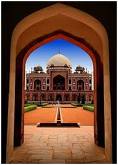
Humayun's senior widow Bega Begum, popularly known as Haji Begum, built the magnificent Humayun's Tomb in Delhi, in 1565. It is one of the most beautiful Mughal monuments, with features like high arches and a full double dome. Located on Mathura Road, near its crossing with Lodi Road, Humayun's Tomb is built on a large stone platform, surrounded by green lawns and has a crescent on the top of the dome, instead of the usual lotus. It is said that the Begum spent one and a half million rupees on the tomb, which was constructed between nine and fourteen years after the death of the Emperor Humayun in 1556.
Mirak Mirza Ghiyas, the architect of Humayun's Tomb, designed it in a Persian 'charbagh' or square four-garden style enclosed by high walls on three sides, and the River Yamuna on the other. The style was introduced in India by Babur, the first Mughal emperor.


Timings: Open on all days from sunrise to sunset
Preferred Timings: Late afternoon is the best time to see Humayun's Tomb, because the natural light aids photography
Admission Fee: INR 10 for citizens/ INR 250 for foreigners


How to Reach: Tourists can either take local buses from various points within the city to reach this monument, which is located on Mathura Road or they can hire auto-rickshaws and taxis or take the metro rail.
Nearest Railway Station: Nizamuddin Railway Station
Nearest Functional Metro Station: Kendriya Terminal
Nearest International Airport: Indira Gandhi International Airport 

GET DIRECTIONS


View Larger Map

Monday, March 21, 2011

GARDEN OF FIVE SENSES (DELHI)


GARDEN OF FIVE SENSES (DELHI).


The Garden of five senses is a breadth taking and enamoring experience. It is not just a park - it is a celebration of aesthetic expression and appreciation, a seamless dialogue between the creations of man and nature that invites interaction and exploration. The Garden of five senses is the latest addition to Delhis cultural circuit. The unique area of the garden with all its natural and man made surrounding has added a new dimension to life in Delhi and caters to all sections of society. The garden is located at Said-ul-Aizab village , close to the Mehrauli heritage area in New Delhi. The garden is built on a large expanse of land, 20 acres to be precise. It was inaugurated in February 2003 by Chief Minister of Delhi. There is an abundant display of flora, with a vast congregation of about 200 special varieties of plants and flowers under one roof.


Attractions Of Garden Of Five Senses

Khas Bagh is developed on the pattern of Mughal Gardens though with a series of modern water channels and fountains, some fitted with a lighting system enhancing the whole beauty of the garden.

Neel Bagh a pool of water lilies, surrounded by a bower like structure covered with colorful plants.

Color Gardens and The Courts of Specimen Plants

The Solar Energy Park

The Solar Park was set up with the assistance of the Ministry of Non-conventional Renewable Energy Sources with the aim of promoting awareness about renewable sources of energy. The main exhibits of the solar park are the two solar-powered Buses, Bicycles, Cars, and a Computer among other things.


Annual Events

Various festivals are held here from time to time which attracts a horde of visitors. The Garden Tourism Festival, Food Festivals, Different Melas, Dandiya Festivals and other cultural programs are held here at different times. For


ENTRY FEE: There is no entrance fee for the Garden of Five Senses. Entry is free and unrestricted.
ENTRY TIMING: It remains open on all days from sunrise to sunset.
TIMING FOR VISIT: 6.00 a.m. to 9.00 p.m


HOW TO REACH GARDEN OF FIVE SENSES: Delhi is well linked by road, rail and air to all parts of the country. After reaching Delhi, tourists can board buses, rickshaws, autos or even hire a cab to reach Garden of Five Senses. Metro rail may also be availed of for reaching here.
Nearest Railway Station :- Nizamuddin Railway station
Nearest Metro Station :- Central Secretariat
Nearest Airport :- Indira Gandhi International Airport
GET DIRECTIONS

View Larger Map

Friday, March 18, 2011

RED FORT ( Lal Qila ) DELHI

RED FORT (Lal Qil'ah or Lal Qila ) DELHI

Red fort lies along the Yamuna River. The layout of the Red Fort was organised to retain and integrate this site with the Salimgarh Fort.

Shah Jahan shifted his capital from Agra to Shahjahanabad and laid the foundation of Red Fort, or the Lal Quila, on 16th April 1639. It took nine years to build this mighty citadel and it got completed on 16th April 1648. It is said that about one crore rupees, an astronomical sum in those days, was spent on its construction. Built of red sandstone, it is octagonal in shape, with two longer sides on the east and west. The perimeter of its strong ramparts is about 2.41 km. Red Fort rises to a height of 33.5 m on the town side and 18 m along the river. A wide moat surrounds the fort, which was originally connected with the river and was always filled with water. The two main gateways, known as Lahori Gate and Delhi Gate,The master builders of the Red Fort were Hamid and Ahmad. Visitors are allowed only in a part of Red Fort, as the army occupies the rest of it. It was designated a UNESCO World Heritage Site in 2007.


MAIN ATTRACTIONS OF RED FORT

Diwan-i-Am                        
Diwan-i-Am or Hall of Public Audience is situated in the Red Fort of Delhi.

Hamam
The hammams or royal baths; these consist of three rooms topped by domes, with a fountain in the center


Moti Masjid
To the west of the hammam is the Moti Masjid, the Pearl Mosque. This was a later addition, built in 1659 as a private mosque for Aurangzeb, Shah Jahan's successor.

Mumtaz Mahal               
One of the original six main-palaces situated along the river front, Mumtaz Mahal was also known as 'Chhoti Baithak'.

Naubat Khana                  

Naubat Khana, or Naqqar Khana (meaning the Drum House), is situated at the entrance of the palace area. Here music was played five times a day at the appointed hours.

Nahr-i-Bihisht
A beautiful water channel called 'Nahr-i-Bihisht' (meaning Stream of Paradise) flew through these palaces.

HOW TO REACH RED FORT

Delhi is well connected by air, rail, and road with important centers of India. Tourists can reach the Red Fort in many ways. They can either take local buses from various points within the city, which is located near the Interstate Bus Terminus at Kashmere Gate in the heart of the city, or, alternatively, they can hire auto-rickshaws and taxis for the purpose. There are also regular buses from other important bus termini like the Interstate Bus Terminus at Sarai Kale Khan and Connaught Place to this monument.


ACCOMODATION

There are several hotels near Red Fort to cater to the accommodation needs of the guests offering them a chance to spend some quality time in the precincts of these medieval structures.

GET DIRECTIONS

View Larger Map

Wednesday, March 16, 2011

RAJAJI NATIONAL PARK


RAJAJI NATIONAL PARK

The park has been created in 1983 by amalgamation of three sanctuaries- Rajaji sanctuary(estd. 1948) Motichur sanctuary (estd. 1964) and Chilla sanctuary(estd. 1977) after the name of renowned statesman and freedom fighter Sri C. Rajgopalachariya - The first and last Governor General of independent India popularly known as "Rajaji". The park is spread over an area of 820.42 sq. km. in three Districts- Dehradun, Haridwar & Pauri Garhwal of Uttaranchal State, India. The majestic Ganges flows through the National Park for a distance of 24km .
The forest ecosystems of the Rajaji National Park are quite varied and diverse.It offers ample opportunities to nature lovers to enjoy the captivating landscape and wildlife.


WILDLIFE ATTRACTION

The park is home to the Tiger, Leopard, Himalayan Bear, Cheetal, hog deer, barking deer, Sambar deer, wild boar, antelopes such as the Nilgai, Goral , Jackal, Hyena, Jungle Cat, Leopard Cat, Civets, Himalayan Yellow-Throated Marten, Sloth Bears, Pythons, King Cobra, Common Krait, Indian Cobra and the Monitor Lizard and above All the Asian Elephant.
Inhabiting the dense green jungles that form the park are an impressive array of creatures - 23 species of mammals - including tigers, leopards, elephants, deer, jungle cat, wild boar and sloth bear - and 315 species of birds are found in Rajaji . The most prominent avian species include pea fowl, woodpeckers, pheasants, kingfishers and barbets, supplemented by a number of migratory species during the winter months. Besides that, the rivers which flow through the park harbour fish such as trout and mahseer.


HOW TO REACH RAJAJI NATIONAL PARK

Rajaji Park, which has several gates, is accessible from Dehradun, Kotdwar and Haridwar: the Ramgarh Gate and Mohand Gate are within 25 km of Dehradun; the Motichur, Ranipur and Chilla Gates are about 9 km from Haridwar; Kunao Gate is 6 km from Rishikesh; and Laldhang gate is 25 km from Kotdwar. Saharanpur, which is conveniently linked by train to other parts of India, is another attractive point to reach the Mohand area of the Park, in nearly an hour by road.

ACCOMODATION
A range of tourist accommodation is available at Rajaji's main campsite. There are Forest rest houses in the surrounding areas of the park. Accommodation is also available in private lodges and resorts outside the Park.
GET DIRECTIONS 

Monday, March 14, 2011

Devka Beach (DAMAN)

Devka Beach

The Devka beach is one of Daman’s most famous beaches and is known all over the region for its vast stretches of sand, which are quite often very deserted.

About 3 km north from Nani Daman, Devka Beach shoreline offers excellent recreation to the visitor. The ambience is serene and easy going. Walking the beach as the waves dance at your toes and the visual drama played out by nature with sea turning its colour and the sky mirroring each passing mood has always charmed the tourists. During low-tide, one can walk right into the sea and collect shells and various stones. The traveler can beat the summer heat by taking swim in the cool water of the sea but take precaution while bathing in sea as there are rocky formations beneath the water.

ATTRACTIONS NEAR DEVKA BEACH
At Devka, the most popular tourist attraction, a beachside amusement park has been developed that includes kids corner with toy train, merry-go round and large garden, fast food centre and ice cream parlour. The multicoloured fountains in the park on play provide an enchanting sight and are tourist’s delight. You can also enjoy pony and camel ride on the sand.
Entry to the park is Rs.5, Camera Rs.15. Taxis and autorickshaws are easily available to take you to Devka (around Rs. 30 for an autorickshaw).

Best time to visit Devka Beach

The Devka beach can be visited any time of the year. However, best time to visit devka is during the monsoons, that is, between the months of June and September.

Best way to reach Devka Beach

  • By Air: Daman Airport, located a few odd kms away, is the nearest airport. However, Daman is a restricted airport and is mainly used by the government and the services. Civilian flights to Daman Airport are rarely allowed. Mumbai, India’s most important airport, is located 180 kms away and is deemed the most convenient.
  • By Rail: The nearest railhead is Vapi (located some 10 odd kilometres away), which is one of the more important railway stations in the region and as such is well-connected to the major cities in the region. Vapi lies on the Mumbai-Delhi mainline, and many express trains passing through have a halt here.
  • By Road: The Devka beach is well connected to all the important cities and other beach resorts in the region. Local transport largely consists of non-metered auto rickshaws.
ACCOMODATION
There are so may 5, 4 star and 3 star hotels and some well affordable resorts provide accommodation facilities to the tourist.Some of the bigger hotels in Daman are in vicinity, along one road. The sea facing restaurants of these hotels are very popular given the cool evenings and sea breeze. The lane opposite the park has some roadside stalls selling custom electronic items, soft toys, readymades and export surplus garments.

View Larger Map